Thursday, 23 October 2014

The awful truth

This week I've been wondering why some people behave so awfully. I got into a Facebook discussion during the week about the Koch Brothers and what on Earth makes them tick. If you haven't heard of these guys, they're enormously wealthy billionaires. They're heavily involved in fossil fuels, chemicals and all kinds of nasty stuff. They're massive bank rollers of climate change denial, campaigners against any kind of social safety net for anyone, and just generally, well, awful. So, what is it that drives them? Are they insane?

How do they justify the selfishness of their actions? How do they feel about the environmental destruction they cause, or the threat they pose to the health and welfare of the entire planet? Don't they care? Don't they think about it? What drives them? It seems 'nuts' to me, and to most people, I'm sure. But, I bet they consider themselves not only perfectly rational, but mightily superior to the likes of me.

Of course, one person's idea of 'awful' behaviour is not the same as another's. A lot of governments seem to think that citizens defending the environment from corporate greed is 'awful'. There have been recent laws passed specifically designed to make it illegal to get in the way of forest destroyers, frackers or miners. Clampdowns on all sorts of hard won democratic rights are in train all over the world, more than usual. Meanwhile there are certain 'rogue' corporations hell bent on selling things that kill people, wipe out bees, poison the waterways and do all kinds of other damage. They face no serious impediment or sanction of any kind, let alone jailing the members of their boards for manslaughter.

It seems backwards to me when democratically elected governments, paid for by the blood and sweat of the people, use the people's money and the people's police to punish people acting in their own self-defence. I'm sure the politicians involved don't see it this way. I wonder if they even think about it? If they do think about it, they probably think these 'trouble makers' deserve whatever they get.

I understand that the oligarchs don't like citizens getting between them and a pot of money, but how do they rationalize this to themselves? Do they see 'consumers' as somehow subhuman, their health and welfare of less importance than their own precious selves? Do they think that their money and power will protect them from climate change, lawsuits, or ravening hoards, so it's not their problem? I guess the aristos probably felt much the same before the French Revolution. They probably didn't waste a lot of time worrying about the plight of the poor, or the scandalous wastefulness of their own lifestyles, or the connection between these things.

But, when just about every religious tradition on the planet espouses the virtues of protecting the weak, giving to the poor, treating others with kindness and compassion, how is it that a smallish group of people just get off 'scott free' when they do the exact opposite? I don't know the answer to that, but I certainly hope that 'karma' will catch up with them in the end, perhaps aided by some new, socially responsible laws that will change the status quo, once we get a few more sane people into positions of power. I just hope it doesn't take too long.


Tuesday, 7 October 2014

Sands of time

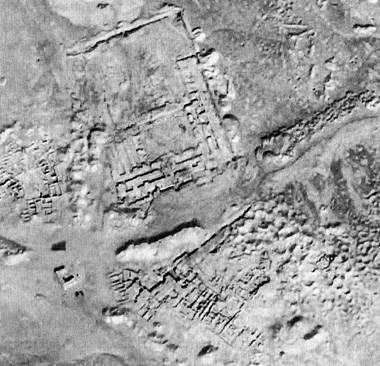
I saw a TV show about satellite archeology this week that got me thinking. By studying images taken from space, it's now possible to see the ruins of all kinds of things under the desert sands, jungles, farms or dried up river beds, that were invisible before. It's revolutionising our understanding of the ancient world. It turns out, there were way more people, way longer ago than previously thought, not just in Egypt but many other countries. It's possible they might even have found the fabled lost city of Atlantis.

The reason these ancient empires disintegrated is often put down to 'climate change'. But I wonder if 'climate change' just came along by accident, or if it was the same affliction that is threatening us now: short-sighted greed leading to self-destruction.

These ancient cultures operated in much the same hierarchical way that we are familiar with today. A ruling class pranced about in palaces, bedecked with jewels, drinking from golden cups while the poor slaved away to keep them in the lap of luxury. Forests were razed, crops were irrigated, furnaces burned night and day, wars raged, merchants traded far and wide and populations boomed. A priestly caste taxed the people handsomely in order to support mighty temples with thousands of staff, stone masons, dancing girls, artisans, cooks and monks, the better to make elaborate ceremonies to keep the people awestruck and docile.

Now, the palaces are gone, their treasures swallowed up by the Earth once more. The temple stones gathered and assembled with such monumental effort, lie broken and scattered and barely recognisable. What was once rich and fertile land is now treeless desert. Will this be the fate of our 'civilization' too? Well, why not? To keep doing the same thing and expect a different outcome is madness, so they say.

It's tough to lay blame on the rulers of the ancient world, who (probably) didn't have access to the sort of information that we have now about how easy it is to mess everything up by chopping down too many trees, lighting too many fires and messing around with the natural water courses. Can we fault people for not controlling their population when they (probably) didn't realise it was going to be a problem? We can't really blame the priests for thinking that the gods stopped making it rain because they were angry with them for not sacrificing enough slaves (I suppose). But what's our excuse? 

Unless we want some future archaeologists to be poring over whatever's left of us (if we're lucky) perhaps it's time to see what history has to teach us about living humbly alongside nature instead of trying to dominate it quite so grandly? Maybe we could start by listening to the people who are still here, and belong to the world's oldest continual civilization, about how they managed it? Just a thought.


Wednesday, 24 September 2014

Opposites don't attract

I've been thinking about opposites a lot the past few days, you know, war and peace, good and evil, love and hate. Last night a young lad, 18 years old, has (allegedly) run amok and (allegedly) stabbed some policemen and wound up on a mortuary slab as a consequence. Very sadly, things like this happen from time to time; far too often, but there it is. But this is not how this unfortunate incident is being reported. The media headlines are all about a 'known terror suspect' being neutralised by heroic coppers, just doing their jobs, protecting 'all of us' from 'extremism'. Vast swathes of the populace are now expected to be locking their doors and quaking in their boots lest balaclava-clad 'terrorists' come and try to decapitate them in their beds.

Maybe it's Grand Final season, but people seem to have formed up faster than usual into two opposing camps, talking about the 'East' and the 'West' and the 'left' and the 'right', 'good' and 'evil' as if these terms had any meaning, except to widen the gap between understanding and compassion. Facebook and Twitter have been alight with slanging matches between those for and against getting involved in Gulf War III. The debate, quite heated and rather sweary in many instances, is mostly conducted by people who have very little knowledge of the history and politics of the region, or the vital (but little discussed) importance of a steady supply of oil to the US military industrial complex. People are accused of being 'traitors' if they question the wisdom of Australia getting involved in a civil war on the other side of the world when we (allegedly) can't afford to fund education or health. People are accused of being 'morons' or 'trolls' if they are in favour of it. There is much ill-informed debate about the tenets of Islam, the wearing of burqas and why 'they hate us'. In fact, 'they' have many good reasons to hate us, and our plasma TVs are nothing to do with it.

It seems pretty obvious to me, that the government is trying to tell us that black is white, up is down, war is peace and 'baddies' can be made into 'goodies' by killing as many of them as possible, torturing them, kicking them off their land and confiscating their stuff. If they have the nerve to rebel violently against this treatment, it's because they want to invade us, because they 'hate our way of life', and because, well, violence is just part of their nature (yeah right, unlike 'us', eh?). We're also told that in order to protect 'our freedoms', we citizens should submit meekly to more surveillance and new laws restricting our movements.

Of course, as Dr Martin Luther King once famously said 'darkness cannot drive out darkness, only light can do that. Hate cannot drive out hate, only love can do that'. But, as usual, the knee jerk reaction is to do the exact opposite. When will we learn to engage with others and seek out areas of agreement before it comes to blows? When will we learn that in order to end conflicts, we need to understand what the root cause is and attend to it? When will we learn that if we don't learn to share the Earth's resources equitably, and treat everyone with dignity and respect, we will never, ever have peace? I don't know the answer to that, but I do know that shouting propaganda at each other won't help with any of this.


Wednesday, 3 September 2014

Karma in action

I've been thinking about 'karma' the past few days because I got talking to someone about it recently (as you do). His view was that 'the universe' is in control of all our lives and decides if, when and why we should 'suffer' - from stubbing our toe to being hit by a meteorite. The good news (allegedly) is that this is all for our own good and part of the plan (...mmm hmmmm....). I explained to him that he was getting a few different religious beliefs mixed up for starters. The guy swore he wasn't a 'religious nut' or anything. He said he just believed in the 'ancient wisdom' handed down from 'Tibet' on this topic. (Sigh). I tried to be reasonable with him. But I had to say, if this is all some kind of a plan it doesn't seem to be going too well so far. Surely, after tens of thousands of years of 'suffering' all this 'karma' we should be there by now? Are we really such slow learners? How much longer does 'the universe' plan to take with all this? Seems like a pretty dud deal to me. I'd be sacking the CEO if I was a shareholder in this enterprise... He didn't think it was funny. Oh well.

But it got me thinking about the way that people will kid themselves into thinking that anything and everything is someone else's fault and it's all beyond their control. We have fundamentalists in the USA saying that the conflict in Gaza is not being caused by the aggression of Zionists or greed of land-grabbers and weapons salesmen. It's the work of God, as predicted in Revelations. We have climate change deniers saying that climate science is nothing but human hubris and 'God' is in charge of the weather. It's not just God getting up to mischief though. We have conspiracy nuts who blame EVERYTHING on the mysterious Illuminati and/or the 1% (who may or may not be the same shadowy group depending on who you talk to). Others just mutter darkly about 'the government' tracking our movements with Myki cards, or any number of other fearful things, in order to control everyone, for dark and dangerous reasons of their own.

Marx famously said: "...Religion is the sigh of the oppressed creature, the heart of a heartless world, just as it is the spirit of a spiritless situation. It is the opium of the people." Well, I think he was right, as he was about a lot of things. But these days we have way more excuses for taking an apathetic view in terms of our destiny than just religion. We have way more things to feel 'spiritless' and 'heartless' about nowadays than the downtrodden Russian proletariat. Maybe that's just how 'they' like it? 'They' like it if the people aren't causing too much fuss, and are all cowering at home in front of their TVs (buying things for preference). Well, I'm here to tell everyone that you are not helpless. It's not hopeless and there is a LOT you can do to make the world a better place, to alleviate suffering, to change unjust laws, to end violence against the weak and to do something about climate change.

 Now don't get me wrong. Doing something doesn't have to stop you believing in God or the universe or the Illuminati or whatever-you-fancy if it pleases you. But, believing in any of those things does not excuse you from taking action that will make the world a better place either. Action speaks louder than words, so they say.

Monday, 1 September 2014

Popularity, populism and propaganda

It seems 'populism' is a bit of a dirty word in these Orwellian times. Populism seems to be especially on the nose, mind you, when people like Clive Palmer or the Greens resort to it. Seems that giving the voters what they want is a shocking thing to do in a secular liberal democracy. Saying that leaving young people without any social safety net for six months will drive them to commit crimes or harm themselves is apparently not common sense, it's 'populist'. Saying that socking everyone with a great big new tax to go to the doctors is unfair isn't plain-speaking, it's 'populist'. Saying that the budget is robbing the poor to give to the rich isn't stating the obvious, it's 'populist'. But, according to the twisted logic of our times, implementing a laundry list of extreme ideologically driven policies, dreamt up by a privately funded right wing think tank, is the responsible 'adult' thing to do. Announcing policies dreamt up by mining magnates, without running them by the public service (or anyone else) for a sanity check first, is very sensible and wise too I suppose?

So, hang on a tick. What's going on? Last time I checked our government was employed by the people to act on behalf of the people, to do what the people want. They have a 'mandate' to spend the people's money on things intended for the welfare of the people, to protect the assets that belong to the people and to uphold the rights of the people. I'm not sure exactly when things changed, but lately it seems to me that our governments believe that they are working for the 'business sector' (which is code for banks and miners) in order to support 'the economy' (which is code for the stock market). They want to protect the assets and welfare of the business sector, to give the business sector 'certainty' (unless they're in the renewable business of course), to listen to the views of business and enact the policies that business wants. They put representatives of 'business' on the boards of public organisations and commission them to write reports on what should be done with public assets (privatise them of course). Why else are we considering lowering minimum wages, fracking farms, dumping spillage in the Great Barrier Reef, killing the renewable energy target, gutting the ABC and CSIRO, removing taxes on the mining sector and banning public demonstrations while increasing surveillance on every citizen? Why indeed.

 As those who have been watching the ICAC proceedings have seen lately, 'business' is well and truly having a corrupting influence on the old parties and we are seeing the results in public policy. You know what they say 'he who pays the piper calls the tune'? Well, it's 'the people' who pay for our governments, so why is it we no longer seem to call the tune? It's obvious that 'business' does not have the best interests of the people at heart. They are apparently hell bent on destroying the whole planet at break neck speed. As long as their share prices stay up, that's all that seems to matter. It's short-sighted, selfish and stupid, but that doesn't seem to matter to most of them. The only thing standing in their way is a rather inconvenient flowering of 'populism' now that the people are able to talk back to governments and 'business', and to each other, via social media. It's time for people power to kick the corporations out of the halls of power, back into their board rooms where they belong.

The Greens have been saying for years that election campaign funding needs a major clean up. At first, as usual, we were laughed at. Now in the US, there's a growing movement to do just this. How much longer can it be until it happens? Well, I suppose that depends on how loudly and long the people demand it. It won't fix everything overnight, but it would certainly be a step in the right direction. 

Friday, 1 August 2014

Stuff ups, scandal and faux pas

I was talking to a pal the other day and he was saying things like 'all' politicians are untrustworthy crooks, 'all' public servants are lazy, good-for-nothings, intent on keeping secrets from the public and that there was no point in voting or getting involved in politics, because it's all completely hopeless. This is a fellow who is well-educated, relatively well-informed, and really quite clever. I corrected him on a few issues of course. I pointed out that he was quite a fan of Adam Bandt and Bob Brown, amongst various other Greens, and they're politicians after all.

I pointed out that there are, no doubt, some public servants who are lazy good-for-nothings, but surely this is true of any industry? Keeping certain secrets (and their personal opinions to themselves) is actually part of their job, so it's a bit rough to fault them for that. I suggested that one of the reasons why there is so much bad behaviour in political circles could well be that many people take his attitude and do their best to ignore the whole process as much as possible.

It seems, like many others, his knowledge about the entire political process is gleaned from the daily paper, nightly news and watching re-runs of Yes Minister. It's no wonder people are so jaded really when you think about it. What gets reported in the papers is not all the thousands of things that governments get right every single day, or the vast number of mind-nummingly dull, but terribly important papers, committees and meetings that politicians have to attend to.

What gets reported is the stuff ups, scandals and faux pas. If you didn't know any better, it would be easy to think that's all that goes on in the corridors of power. It got me thinking what sort of person would put themselves through it? Why do people put their hands up for public office in the first place? Sure, the pay is reasonable, but the hours are crushing. Sure, I suppose some people like the power and the attention. But the flip side is a loss of privacy and a heck of a lot of frustration and disappointment that goes with the territory when things don't go your way, which is the case more often than not. You've got to be pretty tough, pretty determined, not to mention impervious to criticism and pressure. 

Maybe if more people stopped whining about how terrible our governments are and rolled up their sleeves to get involved, or at least better informed, things would improve? Perhaps if the media stopped chasing the sensational or the salacious and reported on things less colourful, but actually more intrinsic to democracy, people would have a more rounded view? Sadly this is unlikely to occur, people being people and newspapers being in the business of selling advertising, when they are not outright pushing propaganda.

The best we can probably expect is that people will continue to view politics as a spectator sport, where they can barrack for their team, shout abuse at the umpire, then forget about it for the rest of the time. Thank goodness for the Greens. It's difficult to even imagine just how awful things would be if everyone who is now, and has ever been involved in the party, had said it was all too hard and never got involved in the first place.

Thursday, 17 July 2014

Now what?

Well, you've no doubt heard the grim news by now that the Senate has passed the repeal of the Clean Energy Future legislation and now Australia officially has no climate change policy, pretty much, at all. Sure, there are a few remnants remaining, but the centre piece, the bit with all the economic teeth, is gone. The RET is still under attack. The Clean Energy Finance Corp hangs in the balance as far as I know. Clive Palmer said he would save it, but he says a lot of things. Without the $11 billion per year of income, it can still do things, but it cannot do what it is supposed to do, which is to drive the economy away from fossil fuels into renewable energy. I've little doubt that it will be shut down as soon as possible and all that money given back to the fossil fuel industry from whence it came if Tony Abbott gets his druthers.

So, it would be easy at this point to give way to despair, but I for one, won't be doing that.  As I've written before, the fossil fuels industry is very much on the defensive globally and their long term future is highly uncertain as more and more money is divested, prices are dropping and public opinion, and therefore political will (at least in sensible countries) increasingly turns against them. I'm not too worried about the long term future of the renewable energy industry these days. Once economically priced domestic and commercial scale solar storage becomes available here, and that's only about 2-3 years way in my reckoning, it will be 'all over Rover'. 

This act of vandalism by Abbott, on behalf of the IPA, will only serve to slow things down a little. Heck, it might even serve to galvanise more people into action than ever before. It's certainly not going to lower retail energy prices in any discernible way that's for sure. It's not going to do anything for the Abbott government's already awful international reputation. It's not going to endear him in the hearts of moderate, intelligent Liberal voters, of whom there are many.

We live in an age of wonders where change can happen at breakneck speed. Things are changing so quickly now it's dizzying. Our communications and technology and the interconnectedness of the world have never been so advanced. People can share ideas, research, art, science, games, projects, funding projects, news ... you name it... in nano-seconds now that once took months or years. A technological breakthrough one year is all over the world the next. Of course, this comes with dangers, when bad ideas like some new poison, silly fad like planking, or a potentially dangerous new device like unmanned drones, is unleashed without due consideration of the consequences. But the up side, is that good ideas spread just as quickly. Mostly the good ideas win (eventually).

I don't know what the next few decades are going to bring. A utopian organic green wonderland with free energy for all? Dystopic social collapse as warlords fight over the last scraps of coal and oil Mad Max style? Nobody would be brave enough to try to predict it. Not even me. One thing is for sure, anything could happen. It's going to be a heck of a ride. 


Wednesday, 2 July 2014

Heaven and hell

I've been thinking about ancient religions this week (as you do).  I was thinking how back in prehistoric times people regarded the Earth as our mother and worshipped all the aspects of the natural world. They believed that when we died we went to an afterlife which they imagined taking place underground. Going underground wasn't considered a bad thing. It was considered like going home.

Things changed over the millennia for some reason, the details of which are mostly lost in the mists of time. We started worshipping gods and goddesses who lived in golden palaces, or mighty banquet halls, in the sky. We forgot about the gods who lived in the trees and rivers, the spirits of the streams and caves. We began to believe that when we die, if we've been very, very good, we go up into the sky to party on with the gods for all eternity. If we've been very, very bad though, we go down into the Earth, which is a terrible punishment. Underground we will be poked with pointy sticks and roasted in horrible fires and tormented in all kinds of other fanciful, but dreadful ways.

It got me thinking about the way we (most of us humans) treat the Earth with complete disdain and disregard, and whether these attitudes are all interconnected? We use words like swamp, scrub, wilderness, wasteland and desert to describe our natural places. We talk about dirt, mud and weeds with distaste. We talk about vermin, pests, wild beasts and germs only in terms of things that should be wiped out. Conversely, we tend to glamourize outer space as a place of adventure and magic, all clean lines, new toys and open frontiers with limitless futures. We don't see space for what it really is - a cold and lifeless void. We don't see the Earth for what she reallly is - our mother, our life support system, our safety net and our only home.

In the backs of the minds of the climate change denying oligarchs, the likes of the Koch brothers and Gina Rinehart, there must lurk the idea that, if we really do manage to ruin a perfectly nice planet, they will be able to fly away. Do they think they will be able to live on a space station somewhere, in some kind of idyllic heaven-like situation, a bit like the elites in the sci-fi/social parody Elysium that was released not long ago? Do they think a new planet will be found that they and their cronies can plunder anew? Do they imagine ruling over Earth Mark II, while living in golden palaces, no doubt after annihilating or enslaving any inconvenient current tenants in the traditional fashion?

Well, this wouldn't be the only disconnect that these people have with reality, would it? It really must be a form of madness, and I find it really rather sad, that so many people have lost their love, respect and connection with our mother, the Earth. Let's hope this attitude changes and changes fast, before it's too late, before she kicks us out of the nest for good.


Saturday, 21 June 2014

A new hope

Sometimes I feel like it's all too hard and that we should just give up, party hard and brace for the end of the world. Then something good happens and I know it's going to be OK. This week I read so many good news stories I had trouble picking which one pleased me most. The Senate knocked back the second attempt to shut down the Clean Energy Finance Corporation, providing a double dissolution trigger should Tony Abbott wish to go that way (I won't be holding my breath personally). Unesco has bowed to a pressure campaign and deferred a decision on dredging in the Barrier Reef for 12 months. More banks have pulled out of financing the Abbott Point coal port, which now looks very unlikely to go ahead. Bulldozing was halted in the Leard State Forest by a people power campaign and a court challenge. Victoria has suspended CSG exploration for 12 months. Victoria and NSW have come out in support of the RET. Courts are quashing this and fining that and no bad deed can go unpunished while social media is watching. There is a light beginning to dawn. It's unmistakeable now. 

Al Gore has written a piece for Rolling Stone, The turning point: New hope for the climate, where he shares his confidence that the renewable energy juggernaut is now unstoppable and that "executives of companies selling electricity generated from the burning of carbon-based fuels (primarily from coal) are openly discussing their growing fears of a utility death spiral." Tony Abbott and crew might think they can just run amok in Canberra, but they're finding it a lot more difficult than they first imagined I suspect. The fossil fuel industry is starting to lash out left and right in desperation at what they call 'big environment' (ha ha!) stopping them from doing things and looking decidedly defensive and jittery.

It's going to be a bumpy ride for the global economy as we transition away from fossil fuels though. Bumpier for some than others. As Bill McKibben pointed out in his own Rolling Stone article a little while ago, Global Warming's Terrifying New Math, vast chunks of the global economy are based on squillions of dollars borrowed against coal, oil and gas reserves that can never be dug up and burned. Personal fortunes of people like our very own Gina Rinehart and Clive Palmer are heavily reliant upon coal that is still in ground in the Galilee Basin and seems destined to stay there

Circumstances are about to overtake them whether they like it or not and the irony is, it's got a lot to do with cold, hard global economics and the power of the 'market'. Coal, gas, uranium and oil stocks will be virtually worthless within a decade is my call. It just won't make economic sense to dig them up any more once economical, small and medium, storage solutions for renewables hit the market in volume, which is about 5 years away by my guess. It's already begun in the USA. Iron ore and other minerals will also quite possibly go into decline as various innovations in manufacturing, such as 3D printing, carbon fibre and nanotechnology really start to take off at scale.

Much as I might enjoy the spectacle of former mining billionaires trying to survive on 'Newstart', it's not all going to be sunshine and lollipops. The arms industry will probably continue to do as well as it always has. Although there will probably be fewer wars over oil, there may be more wars over food and water and arable land, which is a very worrying thought. Climate change is going to be bad, even if we manage to sharply curb our emissions, even if we start rapidly reforesting the planet. With a global population still growing much too fast, billions of people are going to be displaced as some areas become uninhabitable, extreme weather and rising sea levels destroy homes and drought wreaks havoc on agriculture. 

But, I have a lot of hope in the up and coming generation. I hope they won't repeat the mistakes of previous generations and will find ways to cooperate, share resources equitably and hopefully innovate their way out of some of the messes we have got ourselves into. I also predict Green politics is going to continue to surge on, and grow in strength and power when the message finally sinks in that this is our only home and we'd better start taking better care of it if we want to survive the rest of the century. 

Wednesday, 11 June 2014

Telling someone who cares...

So, you want to save the world? It's a quick and easy thing to do to write to a politician. Anyone can do it and it doesn't have to involve chaining yourself to anything or getting arrested if that's not your thing. Sure, they might not read any of your letters, but if they get 2000 letters, they tend to pay attention. The department and ministerial staff will read them in any case, or at least skim some of them. So, the more interesting and snappy you can make it, the more likely it will be noticed by someone. 
For example, in response to this call out to write to politicians I penned a short missive to a few of 'em on the subject of bulldozing going on in a state forest to clear land for a coal mine (sigh). 
Dear Minister

I am writing to request you to urgently stop the illegal clearing of forest  at Maules Creek. Even if you don't care about environmental considerations, which are huge,  stop for a minute and have a think about some other issues that may/should concern you.

1. Economic: the price of coal is dropping like a stone. Proposed coal projects are being abandoned every day and mining companies are going belly  up because they are decreasingly financially viable. The public 'divest'  movement is seeing more and more money taken out of coal globally. Slowing  demand in China and rising renewable energy production all over the world  will only increase the slide on the coal price and it's not ever going to  come back. Despite what industry lobbyists might tell you, that the good times are just around the corner, they aren't. Coal  is over. They just don't know it yet. So, as a government NSW will be left with a giant hole in the  ground when Whitehaven goes into receivership and you will have lost a  beautiful and irreplaceable national park in the process. Is this a responsible way for a  government to behave? Is this what we think of as 'planning'? Ask yourself how the voters will view the billion dollar bill for the cleanup.

Supporting renewable energy projects ahead of mining projects would create good, clean, Australian, high tech jobs, many of them in remote areas, and would create and  keep value in this country. We could create a hugely profitable industry that could see us exporting technology to the world, instead of increasingly unpopular and unprofitable fossil fuels.

2. Legal: Are you 110% sure that the permit process for this mine is all  completely above board? Are you confident that this mining lease will not end  up in ICAC for review? Have you double checked that every single T has been  crossed and i dotted in the planning application process? I would call a halt  until this is done if I were you. Just sayin'.

3. Media: This project has already attracted a lot of media interest because  of the ANZ­ Whitehaven hoax, which highlighted the lack of consultation and  lack of proper process. Currently hundreds of civilian protectors [sic] are  making their way to the forest to fortify the blockade and thousands of new supporters are joining on-line. You will find yourself with another situation on your hands similar to the recent Bentley action. It's a very bad look to send publicly funded riot police into an area  to attack civilians, spending tax payers money to protect the profits of a private corporation in order to destroy the last remaining forest of its type in the world. How do you justify that use of public funds when the public is trying to defend a public asset from private interests?

4. Politics: ICAC has been uncovering a tangled web of corruption, greed and  lack of proper government oversight (to say the least) in terms of its  dealings with the mining industry. Do you think it would be a good look for  your government to get embroiled in any more of this kind of thing on your  watch? The Liberal Party is deeply unpopular with the public at the moment  because of their cavalier attitude towards the people in favour of big  business. Is now the time to start a battle on yet another front with the  citizens of NSW?

Have a think about it. I know you will do the sensible thing and call a halt  to this project before it goes any further. For now, at least stop the bulldozers!

Sincerely,
Miriam Robinson

Tuesday, 27 May 2014

#doubledissolution

So, by now you'll have heard about the budget. Oh boy! Is this going to really set off a powder keg of public opinion against the current regime in Canberra? Some people might be complacent about climate change. They might go 'meh' about Leadbeater's Possum going extinct. The plight of refugees might not cause them too much heartache, especially now they are virtually banished from the 'news'. But wow! touch health, education, pensions, the arts, the retirement age, the ABC, SBS, and the price of petrol and you just might get them out in the streets waving pitchforks and flaming torches. 

It's going to be an interesting time in Australian politics that's for sure. The LNP's popularity is dropping like a stone. They don't have control of the Senate now and they certainly won't have control of the Senate after July. That would be Clive Palmer and his mates with the deciding vote, if the ALP and Greens decide to vote together. Could we have a double dissolution if the Senate knocks back the budget twice? Clive Palmer would love it I reckon. I think he'd be into that like Flynn. Would Abbott & Co blink? (Can Julie Bishop blink?) Hard to say. Already in social media there is a new 'hashtag' #blocksupply. For those who don't know social media, this means you can do a search of Facebook or Twitter and see what they are saying about #blocksupply and you can see if it's 'trending' (it is), that is how many people are discussing it (a lot). Could we be going back to the polls by the end of the year? Time will tell. Public outrage is 'viral'.

The Westminster System is the best we have, but it's beginning look a bit creaky in this fast-paced world where one government can completely transform the whole country in a short period of time. Four years is just too long to let a corporatocracy run amok. Obviously we don't want to be running back and forth to the polling booth every six months (what an exhausting thought!). But there must be a way that people can express their concerns to governments and require them to take notice (other than Facebook and Twitter)? It would have to be carefully thought out to make sure the robber barons of this world could not manipulate it. It is obvious that having a vote doesn't guarantee anything at all if governments can do a complete U-turn on every single promise in their election platforms. Or, perhaps the simplest thing to do is to ban corporation and billionaires from making political donations and publicly fund elections as Bob Brown started advocating years ago? Another idea that is about to go viral I think.

If you're one of those people wondering why everyone is so not under the collar about this, try to imagine what the long term result of this increasing of social inequity will lead. It looks a bit like this and it's not pretty and it's not sustainable in the long term. We certainly don't want to go there. 


Monday, 26 May 2014

The Budget Apocalypse

So, this week I've been talking to my inner-city, lefty, latte sipping mates about the budget (as you do). It's unanimous that it's is an utter disgrace and should be resisted at all costs. My more moderate pals, who only follow the mainstream media (sporadically at best), have been quoting back all the mainstream excuses to me, 'It's not that bad, other budgets have been worse, the rich are going to pay more taxes than before, we have to do this, there's a budget emergency.....' But I've been setting them straight. If Hockey and his pals read any books (other than Mein Kampf and The Fountainhead of course) they would see what they are doing is trying to restore society to Dickensian times. I'm sure they'd secretly adore a return to the 'good old days' when the rich were rich and the poor tugged their forelocks and called them 'Gov'ner' if they didn't want a jolly good thrashing. 

What do they think will actually happen if young people can't get access to unemployment benefits or any other kind of support for up to 6 months? Sure, some will be able to rely on family support, but what of all the others? What will happen when single mothers can't find a job and can't pay the rent? What do they do? Live in their cars and send their children to scavenge for food in rubbish dumps? Do they really want hordes of urchins roaming the streets, Artful Dodger-style, living under bridges, picking a pocket or two? Perhaps once the privatized prisons are all full, we will see prison hulks (orange life boats?) in Port Phillip Bay. We can ship the poor off to privately run gulags in PNG! That would be great for the share price of Transfield (ker ching!). But seriously, have they really thought this through to its logical conclusion? I seriously doubt it.  
    
What exactly are these people thinking? The scary thing is their ideas are based on the 19th century social-Darwinist doctrine of 'survival of the fittest' (The Origin of Species being another book it's unlikely any of them have actually read). Of course they (the wealthy) identify themselves as the 'fittest' and everyone else as 'lesser' and a bit of a nuisance quite frankly. Never mind Dickens, it's more like ancient Rome with its division between citizens and slaves. If they had read any history, they would know this is a zero sum game; in the end nobody wins. Rome was brought to its knees by a series of slave revolts, just when it was overextending its reach and over-spending on its military. Fortunately however, we have a senate that contains a few readers, and has declared it will not pass this budget in its current form. It's going to be important to keep public pressure on them to make sure they hear loudly and clearly from the people that we will not stand for this folly. 

And because you've got to laugh or you'll go mad, here's a clip from another social Darwinist you may find amusing. Even he is not happy with Abbott it seems. 


Tuesday, 22 April 2014

Productivity improvement

I've been thinking about productivity a lot this week. You know, how to make more money for rich folks. We've got to get a wriggle on Australia. We've got to lift our game. There's a lot wrong with this country and we'd better sort it out before the Chinese come over here and start building dozens of freeways and airports and show us all up. We wouldn't want to be embarrassed in front of the neighbours after all would we? 

All those trees have got to go, for starters. They're all 'locked up' in National Parks, just dragging down our GDP. They don't even seem to feel guilty about it. They just stand around all day, taking up valuable space that we could be using to build apartment blocks and power stations, McDonald's drive-throughs and other useful things like that. We can't afford that! We've got to pay for tax cuts for the rich and subsidies for the coal industry. 

Leadbeater's Possum? Cute, sure, but we can't be carrying freeloaders on the system any more. I bet most of them are on the invalid pension, claiming smoke inhalation or homelessness or some other imaginary ailment. They're almost as bad as the mob in Morewell, complaining that smoke gets in their eyes, ears, lungs, curtains... cry babies! Speaking of good-for-nothing low-lifes, koalas, anyone? Drug addicted dole-bludgers all of them. Get a job! Kangaroos? Trouble-makers who don't know their proper place in this country, which is inside a can of Pal. Sharks! Complete waste of space, what do we need them for anyway? I've seen Jaws and I know they're nothing but trouble. We're better of without them. Just get rid of them! Whales? All they want to do is to ruin our chances of a trade deal with Japan. They'd like that, I bet. Raise their retirement age. That will fix them.  

We've got to pull up our socks Australia. We need more submarines and fighter jets. We need more private prisons and off-shore gulags. We need more right wing think tanks and nuclear waste dumps. They don't pay for themselves you know. Most of all we need more mines! Coal mines, uranium mines, gas mines! Mines, mines, mines! We don't need farms. What for?  There's not nearly enough money in farms and all they're too far away from Sydney for anyone to care. Farms are for whingers and National Party voters. Food security you say? Balderdash! Climate change? Pish posh! A greenie conspiracy. Don't make me laugh!

Most of all we've got to make sure the stock market keeps going up and up and up forever. It's imperative to our well being! Nothing matters more than the share price. Everyone knows this. We need to sell everything that's not nailed down (and some stuff that is) to whoever offers us the most cash up front without asking too many questions. 

Don't bore us with all that yackety-yack about 'the public interest' or the 'future'. Where's my violin! The future is now people. We've got billionaires that we've got to maintain to a suitable world-class level of luxury and they want it now! They always want it now! All of it, now! Got to keep them sweet. We wouldn't want them to go offshore would we? That would be a national tragedy. Imagine the taxes we'd.... the jobs they'd ... the many useful contributions ... oh hang on...  

Tuesday, 1 April 2014

What do whales and coal have in common?

You'd have to have been living in seclusion this week not to have heard about the ICJ decision to ban Japan from whaling in the Southern Ocean. This is a huge step forward for the whales, for the environment movement and for common sense. It's been pretty obvious for many years that Japanese whaling activities had nothing to do with scientific research but it took years to gather the required evidence, paperwork and political will to do something about it. This is in no small part due to the efforts of various groups and activists over many, many decades. Pressure from within Japan has been mounting at the same time, with many Japanese actively protesting against whaling and boycotting whale meat, to the point where it was really no longer economically viable. The costly and very public stoushes with Sea Shepherd on the high seas only added to the glare of unwanted, and rather gruesome, publicity, not to mention the expense, of continuing down this road. 

Coal, oil and gas seem so entrenched in the halls of power and in the global economy, it seems that they will never be budged. But it was once this way with many other industries, including whaling, believe it or not. Politics, activism, public opinion and economics need to align to make change happen really fast and fossil fuels are now getting caught up in a 'perfect storm'. It might not seem like it in Australia, but politically they are 'on the nose' in many countries. Economically, they are on a downhill run and are already being out-competed by renewables. In another few years it will be all over financially for new coal projects. Oil and gas won't be far behind. The smart money has already moved. The mainstream is following. Only a handful of slow reactors are still pushing the coal cart with any enthusiasm or optimism. There are large and small public protests everywhere in the world every day about climate change, CSG mining, the Keystone Pipeline, the Great Barrier Reef dredging, coal mining pollution, divestment actions, spills, bribery, corruption and undue political influence ... you name it. It's happening everywhere. You won't see it on the nightly news though, because they don't like to talk about things like that, preferring to lavish their limited reporting budgets on lost airplanes, missing pets and domestic disputes for reasons of their own (ratings?). 

Although you have to read between the lines in the business pages to get any real sense of what's happening, it's obvious that coal stocks are a bad idea in the long term. Although the mainstream media likes to play this down for reasons of their own (probably to do with not upsetting their advertisers) change is coming and coming fast. One day burning fossilized compost to power our cities and light our homes will seem as anachronistic, and just plain inefficient, as using whale oil. Let's hope it happens pronto, before it's too late. Our focus as the Greens is to work on what sort of a world we want to create in the post-carbon, post-industrial, post-growth century. It's important to make sure we don't keep taking these wrong turns down unsustainable and inequitable paths. We want a world of social justice, economic responsibility, environmental wisdom and peace and disarmament. It won't happen overnight and it won't happen by wishing for it, but it will happen if we all do a little bit about it every day. 

Wednesday, 5 March 2014

Oh the inhumanity!

I'm feeling a bit disgusted with the whole human race at the moment. I, like many others no doubt, was absolutely horrified by the atrocities committed at Manus Island, including the brutal murder of a young man, Reza Berati (pictured below). This is referred to, with such blandness by our elected representatives, as an 'incident'. 

I find it hard to imagine how people can be so desensitised to the feelings and suffering of others to allow them to be treated with such harshness and cruelty and I'm not just talking about the PNG police, security guards and locals who participated in the mayhem. I was shocked to read that people had guns pointed at their heads in order to rob them of their cigarettes. Cigarettes? Really? What is wrong with people? 

Well, I know what it is. It's the perception that if you're not one of 'us', you must be one of 'them' and if you're one of 'them' we can do what we like to you. Any kind of difference is enough to create this feeling of separation with another group - gender, skin colour, nationality and religion are just the most obvious. Differences in privilege, wealth, education and background are all ways of making distinctions between one group and another. 

This is nothing new. The desire to belong to a group is very strong. Tribalism is a basic human urge. It must be very old because it's easily recognised in most other mammals. In order to belong to a group, there is a psychological need to define who is and is not in the group. So far so simple. That's all great. Nothing wrong with that. The problem is when politicians, advertisers, religious zealots and various other manipulators, use this simple instinct to drum up fear, envy and hatred in people and create an idea that these 'other' people are not as human as 'us', by extension making it OK if they are robbed, killed or enslaved. I'm just disgusted that so many people keep falling for it. Are we really all so stupid? 

If you think about it, most of human history has involved us coming to terms with 'other' groups, from village to town to nation. It's never been easy. It's often been bloody. Marriage equality is just one example of a new frontier that we are currently struggling to come to terms with in Australia. We haven't really come to terms with our indigenous brothers and sisters, although it's (a bit) better than it used to be (relative to massacring them on sight). 

We're more relaxed about southern European and Vietnamese immigrants than we once were, and not barely notice or remark on a Greek or Italian name in the football team or the judge's bench. But 'Muslims' remain a bridge too far for a lot of people. Could this be because 'Muslims' have stuff 'we' (rich white folk) want? Could it be something that we have been trying to take away from them by trickery or force for the past century like, oh I don't know, vast reserves of oil? The largest opium fields in the world perhaps? Could it be that they have been deliberately demonised in order to make it ok to invade their countries, kill them and take their stuff by force? 

Maybe one day all these artificial divisions between 'groups' will be seen for what they are, just another yoke we need to throw off in order to be free. Maybe one day they will dissolve and we will be able to behold each other just as 'people', equally deserving of sharing everything under the sun, including love and compassion? I hope it doesn't take too long, for everyone's sake.