I've been thinking about how much of human history involves one lot of people murdering another lot and taking their stuff. It's been very much on my mind this week with the #lifestylechoice furore raging all over the internet. For those who don't know their hashtags from their memes, you may have heard that our dear leader, Tony Abbott, justified the latest attempt to separate aboriginal people from their traditional lands in WA, by saying that the government could not afford to keep propping their 'lifestyle choice' as if it was all Club Med and cocktail umbrellas out there. Other people are far more convinced that this is all about making it easier to set up mining leases with as little interference as possible. It makes me pretty angry.
But, it's not just Australia and it's not just in the history books. This kind of dispossession is still going on, all over the place. Israel looks like they are going to return their right wing government, strongly backed by 'nationalists', which means there is not much hope for any kind of proper resolution with the dispossessed Palestinians any time soon. Indonesia is still committing 'slow motion genocide' against West Papuans. Indigenous people in South America are having to defend themselves against constant attacks by miners and loggers. In the USA, Native Americans have said they are ready to go to war to stop the Keystone Pipeline encroaching on their lands. Tibet and China - well, just because you don't hear a lot about it in the 'news' doesn't mean it's not still going on. The shocking things that go on in African countries all the time in the name of commerce of one kind or another are almost too numerable to mention. Russia has annexed large tracts of the Ukraine - the bits with the oil and gas on them of course.
How can we stop spending trillions of dollars every year globally on 'defence' if people cannot learn to stay within their own borders and respect international law (or any laws at all)? If we can't stop wasting so much money on war, how can we ever hope to share the Earth's bounty fairly and bring about any kind of peace? Feed the hungry? Educate the children? Heal the sick? Repair the environment? Save the planet? Anyone think any of these things are more important and more beneficial than building fighter jets and cluster bombs?
It's easy to blame others for their misfortunes and say their populations are too large, or their governments are corrupt, or claim they are to lazy, stupid or drug addled to help themselves. But in truth, a major cause of suffering in the world is rich people 'helping themselves' to stuff that rightfully belongs to poor people.
I sometimes like to fantasise that the rule of law might one day replace the rule of men with guns. I like to think that perhaps people will get so sick of the terrible injustices committed every day by a greedy minority they will actually do something about it. Like what? Like beefing up the ICJ so people who break the law will be prosecuted and punished? Like funding the UN sufficiently so they can actually be the international police and peacekeeping force we obviously need? I have always been a dreamer. But I'm not the only one. Maybe one day these sorts of ideas will be discussed on the 'news' and on TV panel shows as seriously and as often as shark attacks and bank interest rates? Until then, we'll have to make do with the internet.
Tuesday, 17 March 2015

Monday, 16 March 2015
Free money?
Recently we mourned the passing of Leonard Nimoy, the actor most famous for playing Mr Spok, in Star Trek. It got me thinking about the way Gene Roddenberry, the creator of Star Trek, imagined an entire society, the Federation, where money had become obsolete. There is simply no need for it. Replicators make any kinds of goods that people could wish for, including food, so there is no scarcity. There is no need to hoard anything if you can just press a button whenever you want something. What work still needs to be done that can't be done by machines, is done for its own enjoyment and for the betterment of the common weal. I guess there might be some people in this utoptian future who were too lazy to work, but so what? What harm would they be doing in such an abundant society? Most people prefer to have something useful to do. It makes you think.
It is obvious to many people apart from me that the way we have organised our world is not sustainable and cannot continue. All this grubbing after money and destroying things in the process is no good. But what is the alternative? What has to change? Some people would have trouble even imagining a world without money unless, of course, they are Star Trek fans. But believe it or not, not only is it possible to do without money in the real world, it is the normal and natural way to live. People have lived without money for far longer than we have lived with it. Cash money is quite a recent innovation. Not that long ago most people had little use for it. Everything was made, grown, hunted or traded. Imagine a world where people had enough of everything; food, decent shelter, whatever tools they needed, but no more than they needed. Imagine a world where there was no such thing as a billionaire? Do you think that would be a better life or a worse one than the lives we live now?
It's not strictly science fiction either. Robots and replicators are already being used to make things and do jobs that people used to do. Nanobots are no longer just a fantasy. Money these days is virtually meaningless anyway as governments just print more if they want and nobody bats and eye. As our governments flail about trying to come to terms with the mess that has been created by the 1%, maybe it is time to have a major rethink about the role of money in our society and indeed, the role of 'work'. Instead of trying to fix new problems using old fashioned remedies, and giving the unemployed, the homeless, the sick and the poor a good kicking at every opportunity, perhaps we need to think a bit more imaginatively? I don't have the faintest idea about how the transition away from money would be made and what the obstacles would be, but it's a nice idea to think about, isn't it?
It is obvious to many people apart from me that the way we have organised our world is not sustainable and cannot continue. All this grubbing after money and destroying things in the process is no good. But what is the alternative? What has to change? Some people would have trouble even imagining a world without money unless, of course, they are Star Trek fans. But believe it or not, not only is it possible to do without money in the real world, it is the normal and natural way to live. People have lived without money for far longer than we have lived with it. Cash money is quite a recent innovation. Not that long ago most people had little use for it. Everything was made, grown, hunted or traded. Imagine a world where people had enough of everything; food, decent shelter, whatever tools they needed, but no more than they needed. Imagine a world where there was no such thing as a billionaire? Do you think that would be a better life or a worse one than the lives we live now?
It's not strictly science fiction either. Robots and replicators are already being used to make things and do jobs that people used to do. Nanobots are no longer just a fantasy. Money these days is virtually meaningless anyway as governments just print more if they want and nobody bats and eye. As our governments flail about trying to come to terms with the mess that has been created by the 1%, maybe it is time to have a major rethink about the role of money in our society and indeed, the role of 'work'. Instead of trying to fix new problems using old fashioned remedies, and giving the unemployed, the homeless, the sick and the poor a good kicking at every opportunity, perhaps we need to think a bit more imaginatively? I don't have the faintest idea about how the transition away from money would be made and what the obstacles would be, but it's a nice idea to think about, isn't it?
Thursday, 23 October 2014
The awful truth
This week I've been wondering why some people behave so awfully. I got into a Facebook discussion during the week about the Koch Brothers and what on Earth makes them tick. If you haven't heard of these guys, they're enormously wealthy billionaires. They're heavily involved in fossil fuels, chemicals and all kinds of nasty stuff. They're massive bank rollers of climate change denial, campaigners against any kind of social safety net for anyone, and just generally, well, awful.
So, what is it that drives them? Are they insane?
How do they justify the selfishness of their actions? How do they feel about the environmental destruction they cause, or the threat they pose to the health and welfare of the entire planet? Don't they care? Don't they think about it? What drives them? It seems 'nuts' to me, and to most people, I'm sure. But, I bet they consider themselves not only perfectly rational, but mightily superior to the likes of me.
Of course, one person's idea of 'awful' behaviour is not the same as another's. A lot of governments seem to think that citizens defending the environment from corporate greed is 'awful'. There have been recent laws passed specifically designed to make it illegal to get in the way of forest destroyers, frackers or miners. Clampdowns on all sorts of hard won democratic rights are in train all over the world, more than usual. Meanwhile there are certain 'rogue' corporations hell bent on selling things that kill people, wipe out bees, poison the waterways and do all kinds of other damage. They face no serious impediment or sanction of any kind, let alone jailing the members of their boards for manslaughter.
It seems backwards to me when democratically elected governments, paid for by the blood and sweat of the people, use the people's money and the people's police to punish people acting in their own self-defence. I'm sure the politicians involved don't see it this way. I wonder if they even think about it? If they do think about it, they probably think these 'trouble makers' deserve whatever they get.
I understand that the oligarchs don't like citizens getting between them and a pot of money, but how do they rationalize this to themselves? Do they see 'consumers' as somehow subhuman, their health and welfare of less importance than their own precious selves? Do they think that their money and power will protect them from climate change, lawsuits, or ravening hoards, so it's not their problem? I guess the aristos probably felt much the same before the French Revolution. They probably didn't waste a lot of time worrying about the plight of the poor, or the scandalous wastefulness of their own lifestyles, or the connection between these things.
But, when just about every religious tradition on the planet espouses the virtues of protecting the weak, giving to the poor, treating others with kindness and compassion, how is it that a smallish group of people just get off 'scott free' when they do the exact opposite? I don't know the answer to that, but I certainly hope that 'karma' will catch up with them in the end, perhaps aided by some new, socially responsible laws that will change the status quo, once we get a few more sane people into positions of power. I just hope it doesn't take too long.
How do they justify the selfishness of their actions? How do they feel about the environmental destruction they cause, or the threat they pose to the health and welfare of the entire planet? Don't they care? Don't they think about it? What drives them? It seems 'nuts' to me, and to most people, I'm sure. But, I bet they consider themselves not only perfectly rational, but mightily superior to the likes of me.
Of course, one person's idea of 'awful' behaviour is not the same as another's. A lot of governments seem to think that citizens defending the environment from corporate greed is 'awful'. There have been recent laws passed specifically designed to make it illegal to get in the way of forest destroyers, frackers or miners. Clampdowns on all sorts of hard won democratic rights are in train all over the world, more than usual. Meanwhile there are certain 'rogue' corporations hell bent on selling things that kill people, wipe out bees, poison the waterways and do all kinds of other damage. They face no serious impediment or sanction of any kind, let alone jailing the members of their boards for manslaughter.
It seems backwards to me when democratically elected governments, paid for by the blood and sweat of the people, use the people's money and the people's police to punish people acting in their own self-defence. I'm sure the politicians involved don't see it this way. I wonder if they even think about it? If they do think about it, they probably think these 'trouble makers' deserve whatever they get.
I understand that the oligarchs don't like citizens getting between them and a pot of money, but how do they rationalize this to themselves? Do they see 'consumers' as somehow subhuman, their health and welfare of less importance than their own precious selves? Do they think that their money and power will protect them from climate change, lawsuits, or ravening hoards, so it's not their problem? I guess the aristos probably felt much the same before the French Revolution. They probably didn't waste a lot of time worrying about the plight of the poor, or the scandalous wastefulness of their own lifestyles, or the connection between these things.
But, when just about every religious tradition on the planet espouses the virtues of protecting the weak, giving to the poor, treating others with kindness and compassion, how is it that a smallish group of people just get off 'scott free' when they do the exact opposite? I don't know the answer to that, but I certainly hope that 'karma' will catch up with them in the end, perhaps aided by some new, socially responsible laws that will change the status quo, once we get a few more sane people into positions of power. I just hope it doesn't take too long.
Tuesday, 7 October 2014
Sands of time
I saw a TV show about satellite archeology this week that got me thinking. By studying images taken from space, it's now possible to see the ruins of all kinds of things under the desert sands, jungles, farms or dried up river beds, that were invisible before. It's revolutionising our understanding of the ancient world. It turns out, there were way more people, way longer ago than previously thought, not just in Egypt but many other countries. It's possible they might even have found the fabled lost city of Atlantis.
The reason these ancient empires disintegrated is often put down to 'climate change'. But I wonder if 'climate change' just came along by accident, or if it was the same affliction that is threatening us now: short-sighted greed leading to self-destruction.
These ancient cultures operated in much the same hierarchical way that we are familiar with today. A ruling class pranced about in palaces, bedecked with jewels, drinking from golden cups while the poor slaved away to keep them in the lap of luxury. Forests were razed, crops were irrigated, furnaces burned night and day, wars raged, merchants traded far and wide and populations boomed. A priestly caste taxed the people handsomely in order to support mighty temples with thousands of staff, stone masons, dancing girls, artisans, cooks and monks, the better to make elaborate ceremonies to keep the people awestruck and docile.
Now, the palaces are gone, their treasures swallowed up by the Earth once more. The temple stones gathered and assembled with such monumental effort, lie broken and scattered and barely recognisable. What was once rich and fertile land is now treeless desert. Will this be the fate of our 'civilization' too? Well, why not? To keep doing the same thing and expect a different outcome is madness, so they say.
It's tough to lay blame on the rulers of the ancient world, who (probably) didn't have access to the sort of information that we have now about how easy it is to mess everything up by chopping down too many trees, lighting too many fires and messing around with the natural water courses. Can we fault people for not controlling their population when they (probably) didn't realise it was going to be a problem? We can't really blame the priests for thinking that the gods stopped making it rain because they were angry with them for not sacrificing enough slaves (I suppose). But what's our excuse?
Unless we want some future archaeologists to be poring over whatever's left of us (if we're lucky) perhaps it's time to see what history has to teach us about living humbly alongside nature instead of trying to dominate it quite so grandly? Maybe we could start by listening to the people who are still here, and belong to the world's oldest continual civilization, about how they managed it? Just a thought.
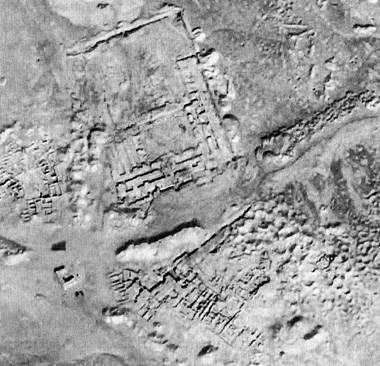
The reason these ancient empires disintegrated is often put down to 'climate change'. But I wonder if 'climate change' just came along by accident, or if it was the same affliction that is threatening us now: short-sighted greed leading to self-destruction.
These ancient cultures operated in much the same hierarchical way that we are familiar with today. A ruling class pranced about in palaces, bedecked with jewels, drinking from golden cups while the poor slaved away to keep them in the lap of luxury. Forests were razed, crops were irrigated, furnaces burned night and day, wars raged, merchants traded far and wide and populations boomed. A priestly caste taxed the people handsomely in order to support mighty temples with thousands of staff, stone masons, dancing girls, artisans, cooks and monks, the better to make elaborate ceremonies to keep the people awestruck and docile.
Now, the palaces are gone, their treasures swallowed up by the Earth once more. The temple stones gathered and assembled with such monumental effort, lie broken and scattered and barely recognisable. What was once rich and fertile land is now treeless desert. Will this be the fate of our 'civilization' too? Well, why not? To keep doing the same thing and expect a different outcome is madness, so they say.
It's tough to lay blame on the rulers of the ancient world, who (probably) didn't have access to the sort of information that we have now about how easy it is to mess everything up by chopping down too many trees, lighting too many fires and messing around with the natural water courses. Can we fault people for not controlling their population when they (probably) didn't realise it was going to be a problem? We can't really blame the priests for thinking that the gods stopped making it rain because they were angry with them for not sacrificing enough slaves (I suppose). But what's our excuse?
Unless we want some future archaeologists to be poring over whatever's left of us (if we're lucky) perhaps it's time to see what history has to teach us about living humbly alongside nature instead of trying to dominate it quite so grandly? Maybe we could start by listening to the people who are still here, and belong to the world's oldest continual civilization, about how they managed it? Just a thought.
Wednesday, 24 September 2014
Opposites don't attract
I've been thinking about opposites a lot the past few days, you know, war and peace, good and evil, love and hate. Last night a young lad, 18 years old, has (allegedly) run amok and (allegedly) stabbed some policemen and wound up on a mortuary slab as a consequence. Very sadly, things like this happen from time to time; far too often, but there it is. But this is not how this unfortunate incident is being reported. The media headlines are all about a 'known terror suspect' being neutralised by heroic coppers, just doing their jobs, protecting 'all of us' from 'extremism'. Vast swathes of the populace are now expected to be locking their doors and quaking in their boots lest balaclava-clad 'terrorists' come and try to decapitate them in their beds.
Maybe it's Grand Final season, but people seem to have formed up faster than usual into two opposing camps, talking about the 'East' and the 'West' and the 'left' and the 'right', 'good' and 'evil' as if these terms had any meaning, except to widen the gap between understanding and compassion. Facebook and Twitter have been alight with slanging matches between those for and against getting involved in Gulf War III. The debate, quite heated and rather sweary in many instances, is mostly conducted by people who have very little knowledge of the history and politics of the region, or the vital (but little discussed) importance of a steady supply of oil to the US military industrial complex. People are accused of being 'traitors' if they question the wisdom of Australia getting involved in a civil war on the other side of the world when we (allegedly) can't afford to fund education or health. People are accused of being 'morons' or 'trolls' if they are in favour of it. There is much ill-informed debate about the tenets of Islam, the wearing of burqas and why 'they hate us'. In fact, 'they' have many good reasons to hate us, and our plasma TVs are nothing to do with it.
It seems pretty obvious to me, that the government is trying to tell us that black is white, up is down, war is peace and 'baddies' can be made into 'goodies' by killing as many of them as possible, torturing them, kicking them off their land and confiscating their stuff. If they have the nerve to rebel violently against this treatment, it's because they want to invade us, because they 'hate our way of life', and because, well, violence is just part of their nature (yeah right, unlike 'us', eh?). We're also told that in order to protect 'our freedoms', we citizens should submit meekly to more surveillance and new laws restricting our movements.
Of course, as Dr Martin Luther King once famously said 'darkness cannot drive out darkness, only light can do that. Hate cannot drive out hate, only love can do that'. But, as usual, the knee jerk reaction is to do the exact opposite. When will we learn to engage with others and seek out areas of agreement before it comes to blows? When will we learn that in order to end conflicts, we need to understand what the root cause is and attend to it? When will we learn that if we don't learn to share the Earth's resources equitably, and treat everyone with dignity and respect, we will never, ever have peace? I don't know the answer to that, but I do know that shouting propaganda at each other won't help with any of this.

Maybe it's Grand Final season, but people seem to have formed up faster than usual into two opposing camps, talking about the 'East' and the 'West' and the 'left' and the 'right', 'good' and 'evil' as if these terms had any meaning, except to widen the gap between understanding and compassion. Facebook and Twitter have been alight with slanging matches between those for and against getting involved in Gulf War III. The debate, quite heated and rather sweary in many instances, is mostly conducted by people who have very little knowledge of the history and politics of the region, or the vital (but little discussed) importance of a steady supply of oil to the US military industrial complex. People are accused of being 'traitors' if they question the wisdom of Australia getting involved in a civil war on the other side of the world when we (allegedly) can't afford to fund education or health. People are accused of being 'morons' or 'trolls' if they are in favour of it. There is much ill-informed debate about the tenets of Islam, the wearing of burqas and why 'they hate us'. In fact, 'they' have many good reasons to hate us, and our plasma TVs are nothing to do with it.
It seems pretty obvious to me, that the government is trying to tell us that black is white, up is down, war is peace and 'baddies' can be made into 'goodies' by killing as many of them as possible, torturing them, kicking them off their land and confiscating their stuff. If they have the nerve to rebel violently against this treatment, it's because they want to invade us, because they 'hate our way of life', and because, well, violence is just part of their nature (yeah right, unlike 'us', eh?). We're also told that in order to protect 'our freedoms', we citizens should submit meekly to more surveillance and new laws restricting our movements.
Of course, as Dr Martin Luther King once famously said 'darkness cannot drive out darkness, only light can do that. Hate cannot drive out hate, only love can do that'. But, as usual, the knee jerk reaction is to do the exact opposite. When will we learn to engage with others and seek out areas of agreement before it comes to blows? When will we learn that in order to end conflicts, we need to understand what the root cause is and attend to it? When will we learn that if we don't learn to share the Earth's resources equitably, and treat everyone with dignity and respect, we will never, ever have peace? I don't know the answer to that, but I do know that shouting propaganda at each other won't help with any of this.
Wednesday, 3 September 2014
Karma in action
I've been thinking about 'karma' the past few days because I got talking to someone about it recently (as you do). His view was that 'the universe' is in control of all our lives and decides if, when and why we should 'suffer' - from stubbing our toe to being hit by a meteorite. The good news (allegedly) is that this is all for our own good and part of the plan (...mmm hmmmm....). I explained to him that he was getting a few different religious beliefs mixed up for starters. The guy swore he wasn't a 'religious nut' or anything. He said he just believed in the 'ancient wisdom' handed down from 'Tibet' on this topic. (Sigh). I tried to be reasonable with him. But I had to say, if this is all some kind of a plan it doesn't seem to be going too well so far. Surely, after tens of thousands of years of 'suffering' all this 'karma' we should be there by now? Are we really such slow learners? How much longer does 'the universe' plan to take with all this? Seems like a pretty dud deal to me. I'd be sacking the CEO if I was a shareholder in this enterprise... He didn't think it was funny. Oh well.
But it got me thinking about the way that people will kid themselves into thinking that anything and everything is someone else's fault and it's all beyond their control. We have fundamentalists in the USA saying that the conflict in Gaza is not being caused by the aggression of Zionists or greed of land-grabbers and weapons salesmen. It's the work of God, as predicted in Revelations. We have climate change deniers saying that climate science is nothing but human hubris and 'God' is in charge of the weather. It's not just God getting up to mischief though. We have conspiracy nuts who blame EVERYTHING on the mysterious Illuminati and/or the 1% (who may or may not be the same shadowy group depending on who you talk to). Others just mutter darkly about 'the government' tracking our movements with Myki cards, or any number of other fearful things, in order to control everyone, for dark and dangerous reasons of their own.
Marx famously said: "...Religion is the sigh of the oppressed creature, the heart of a heartless world, just as it is the spirit of a spiritless situation. It is the opium of the people." Well, I think he was right, as he was about a lot of things. But these days we have way more excuses for taking an apathetic view in terms of our destiny than just religion. We have way more things to feel 'spiritless' and 'heartless' about nowadays than the downtrodden Russian proletariat. Maybe that's just how 'they' like it? 'They' like it if the people aren't causing too much fuss, and are all cowering at home in front of their TVs (buying things for preference). Well, I'm here to tell everyone that you are not helpless. It's not hopeless and there is a LOT you can do to make the world a better place, to alleviate suffering, to change unjust laws, to end violence against the weak and to do something about climate change.
Now don't get me wrong. Doing something doesn't have to stop you believing in God or the universe or the Illuminati or whatever-you-fancy if it pleases you. But, believing in any of those things does not excuse you from taking action that will make the world a better place either. Action speaks louder than words, so they say.
But it got me thinking about the way that people will kid themselves into thinking that anything and everything is someone else's fault and it's all beyond their control. We have fundamentalists in the USA saying that the conflict in Gaza is not being caused by the aggression of Zionists or greed of land-grabbers and weapons salesmen. It's the work of God, as predicted in Revelations. We have climate change deniers saying that climate science is nothing but human hubris and 'God' is in charge of the weather. It's not just God getting up to mischief though. We have conspiracy nuts who blame EVERYTHING on the mysterious Illuminati and/or the 1% (who may or may not be the same shadowy group depending on who you talk to). Others just mutter darkly about 'the government' tracking our movements with Myki cards, or any number of other fearful things, in order to control everyone, for dark and dangerous reasons of their own.
Marx famously said: "...Religion is the sigh of the oppressed creature, the heart of a heartless world, just as it is the spirit of a spiritless situation. It is the opium of the people." Well, I think he was right, as he was about a lot of things. But these days we have way more excuses for taking an apathetic view in terms of our destiny than just religion. We have way more things to feel 'spiritless' and 'heartless' about nowadays than the downtrodden Russian proletariat. Maybe that's just how 'they' like it? 'They' like it if the people aren't causing too much fuss, and are all cowering at home in front of their TVs (buying things for preference). Well, I'm here to tell everyone that you are not helpless. It's not hopeless and there is a LOT you can do to make the world a better place, to alleviate suffering, to change unjust laws, to end violence against the weak and to do something about climate change.
Now don't get me wrong. Doing something doesn't have to stop you believing in God or the universe or the Illuminati or whatever-you-fancy if it pleases you. But, believing in any of those things does not excuse you from taking action that will make the world a better place either. Action speaks louder than words, so they say.
Monday, 1 September 2014
Popularity, populism and propaganda
It seems 'populism' is a bit of a dirty word in these Orwellian times. Populism seems to be especially on the nose, mind you, when people like Clive Palmer or the Greens resort to it. Seems that giving the voters what they want is a shocking thing to do in a secular liberal democracy. Saying that leaving young people without any social safety net for six months will drive them to commit crimes or harm themselves is apparently not common sense, it's 'populist'. Saying that socking everyone with a great big new tax to go to the doctors is unfair isn't plain-speaking, it's 'populist'. Saying that the budget is robbing the poor to give to the rich isn't stating the obvious, it's 'populist'. But, according to the twisted logic of our times, implementing a laundry list of extreme ideologically driven policies, dreamt up by a privately funded right wing think tank, is the responsible 'adult' thing to do. Announcing policies dreamt up by mining magnates, without running them by the public service (or anyone else) for a sanity check first, is very sensible and wise too I suppose?
So, hang on a tick. What's going on? Last time I checked our government was employed by the people to act on behalf of the people, to do what the people want. They have a 'mandate' to spend the people's money on things intended for the welfare of the people, to protect the assets that belong to the people and to uphold the rights of the people. I'm not sure exactly when things changed, but lately it seems to me that our governments believe that they are working for the 'business sector' (which is code for banks and miners) in order to support 'the economy' (which is code for the stock market). They want to protect the assets and welfare of the business sector, to give the business sector 'certainty' (unless they're in the renewable business of course), to listen to the views of business and enact the policies that business wants. They put representatives of 'business' on the boards of public organisations and commission them to write reports on what should be done with public assets (privatise them of course). Why else are we considering lowering minimum wages, fracking farms, dumping spillage in the Great Barrier Reef, killing the renewable energy target, gutting the ABC and CSIRO, removing taxes on the mining sector and banning public demonstrations while increasing surveillance on every citizen? Why indeed.
As those who have been watching the ICAC proceedings have seen lately, 'business' is well and truly having a corrupting influence on the old parties and we are seeing the results in public policy. You know what they say 'he who pays the piper calls the tune'? Well, it's 'the people' who pay for our governments, so why is it we no longer seem to call the tune? It's obvious that 'business' does not have the best interests of the people at heart. They are apparently hell bent on destroying the whole planet at break neck speed. As long as their share prices stay up, that's all that seems to matter. It's short-sighted, selfish and stupid, but that doesn't seem to matter to most of them. The only thing standing in their way is a rather inconvenient flowering of 'populism' now that the people are able to talk back to governments and 'business', and to each other, via social media. It's time for people power to kick the corporations out of the halls of power, back into their board rooms where they belong.
The Greens have been saying for years that election campaign funding needs a major clean up. At first, as usual, we were laughed at. Now in the US, there's a growing movement to do just this. How much longer can it be until it happens? Well, I suppose that depends on how loudly and long the people demand it. It won't fix everything overnight, but it would certainly be a step in the right direction.
So, hang on a tick. What's going on? Last time I checked our government was employed by the people to act on behalf of the people, to do what the people want. They have a 'mandate' to spend the people's money on things intended for the welfare of the people, to protect the assets that belong to the people and to uphold the rights of the people. I'm not sure exactly when things changed, but lately it seems to me that our governments believe that they are working for the 'business sector' (which is code for banks and miners) in order to support 'the economy' (which is code for the stock market). They want to protect the assets and welfare of the business sector, to give the business sector 'certainty' (unless they're in the renewable business of course), to listen to the views of business and enact the policies that business wants. They put representatives of 'business' on the boards of public organisations and commission them to write reports on what should be done with public assets (privatise them of course). Why else are we considering lowering minimum wages, fracking farms, dumping spillage in the Great Barrier Reef, killing the renewable energy target, gutting the ABC and CSIRO, removing taxes on the mining sector and banning public demonstrations while increasing surveillance on every citizen? Why indeed.
As those who have been watching the ICAC proceedings have seen lately, 'business' is well and truly having a corrupting influence on the old parties and we are seeing the results in public policy. You know what they say 'he who pays the piper calls the tune'? Well, it's 'the people' who pay for our governments, so why is it we no longer seem to call the tune? It's obvious that 'business' does not have the best interests of the people at heart. They are apparently hell bent on destroying the whole planet at break neck speed. As long as their share prices stay up, that's all that seems to matter. It's short-sighted, selfish and stupid, but that doesn't seem to matter to most of them. The only thing standing in their way is a rather inconvenient flowering of 'populism' now that the people are able to talk back to governments and 'business', and to each other, via social media. It's time for people power to kick the corporations out of the halls of power, back into their board rooms where they belong.
The Greens have been saying for years that election campaign funding needs a major clean up. At first, as usual, we were laughed at. Now in the US, there's a growing movement to do just this. How much longer can it be until it happens? Well, I suppose that depends on how loudly and long the people demand it. It won't fix everything overnight, but it would certainly be a step in the right direction.
Subscribe to:
Posts (Atom)